

Introduction
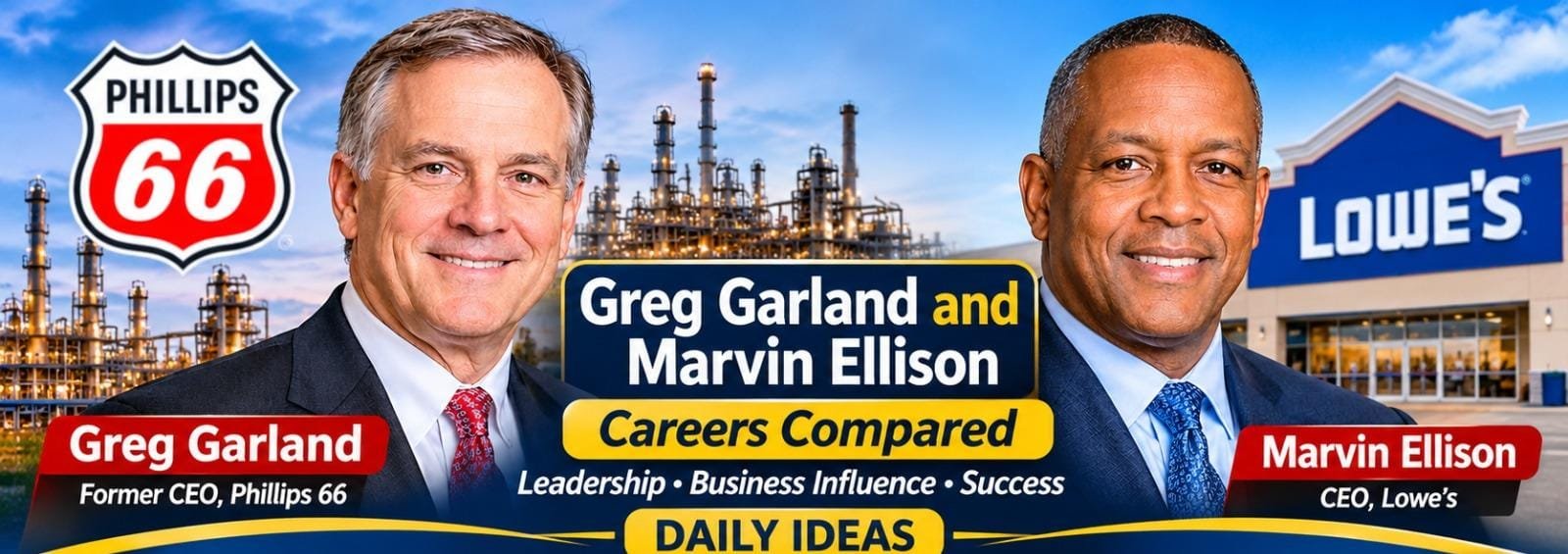
The names Greg Garland and Marvin Ellison represent two accomplished business leaders who have built influential careers in different sectors of American corporate life. Greg Garland is widely recognized for his leadership in the energy industry, particularly through his former role as chairman and chief executive officer of Phillips 66. Marvin Ellison, meanwhile, has established a strong reputation in retail management and currently leads Lowe’s Companies as its chairman, president, and chief executive officer.
People searching for Greg Garland and Marvin Ellison may be interested in understanding their professional backgrounds, leadership experiences, business achievements, and possible connections. Although both executives have held important positions in major American corporations, their careers have developed in different industries.
Understanding their individual journeys provides a useful perspective on corporate leadership, organizational development, and the different approaches required to manage large businesses.
Who Are Greg Garland and Marvin Ellison?
Greg Garland and Marvin Ellison are established executives whose careers demonstrate experience in managing large organizations and navigating complex business environments.
However, they should not be confused as business partners or relatives. Their publicly documented professional biographies describe separate career paths, and there is no established public evidence of a direct business partnership between them.
Greg Garland: An Experienced Energy Industry Executive
Former Chairman and CEO of Phillips 66
Greg C. Garland is an American business executive with more than four decades of experience in the energy and chemical industries. He became particularly well known through his leadership at Phillips 66, where he served as chairman and chief executive officer from 2012 until June 2022.
Before joining Phillips 66’s senior leadership, Garland held several important positions in the energy sector. He served as president and chief executive officer of Chevron Phillips Chemical Company between 2008 and 2010. He also worked at ConocoPhillips as senior vice president of Exploration and Production for the Americas.
His career demonstrates experience in several important areas, including:
- Energy production and manufacturing.
- Chemical industry operations.
- Corporate strategy and business development.
- International energy markets.
- Organizational leadership and corporate governance.
Garland studied chemical engineering at Texas A&M University, graduating in 1980. His technical education provided a foundation for a career that eventually developed into senior corporate leadership.
Following his time at Phillips 66, Garland continued contributing to corporate governance. He has served on the board of Amgen and joined ExxonMobil’s board of directors in November 2025.
These positions demonstrate the continued relevance of his experience in business strategy, risk management, and large-scale corporate operations. Amgen+3
Marvin Ellison: A Recognized Leader in American Retail
Chairman, President and CEO of Lowe’s
Marvin R. Ellison is an American retail executive recognized for his extensive experience in store operations, customer service, logistics, and corporate management.
He became president and chief executive officer of Lowe’s Companies in July 2018. He later assumed the position of chairman of the company’s board in May 2021.
Before joining Lowe’s, Ellison served as chairman and CEO of J.C. Penney from 2015 to 2018. His earlier professional experience includes approximately 12 years in senior operational positions at The Home Depot and 15 years working at Target Corporation.
This combination of experience gave him a detailed understanding of different aspects of retail management.
His professional background includes:
- Retail operations and store management.
- Customer experience and service improvement.
- Supply chain and logistics.
- Digital transformation and e-commerce.
- Business strategy and organizational development.
Ellison earned a bachelor’s degree in business administration from the University of Memphis and an Executive MBA from Emory University’s Goizueta Business School.
His career illustrates how experience in operational positions can create opportunities for advancement into executive leadership. Lowe’s Corporate+3
Greg Garland and Marvin Ellison: Comparing Their Professional Careers
One of the most interesting aspects of Greg Garland and Marvin Ellison is how their careers demonstrate different forms of corporate leadership.
Garland developed his professional reputation in the energy and chemical industries, while Ellison built his experience in retail and consumer services.
Although their industries operate differently, both require executives to understand financial performance, employee management, long-term planning, and changing customer or market expectations.
The following table highlights their major professional differences.
| Category | Greg Garland | Marvin Ellison |
|---|---|---|
| Main industry | Energy and chemicals | Retail and home improvement |
| Best-known leadership role | Former CEO of Phillips 66 | CEO of Lowe’s |
| Major previous company | ConocoPhillips | Target |
| Other leadership experience | Chevron Phillips Chemical | Home Depot and J.C. Penney |
| Education | Chemical Engineering | Business Administration and MBA |
| Leadership focus | Energy operations and corporate strategy | Retail operations and customer experience |
| Major corporate association | Phillips 66 | Lowe’s |
Their professional experiences demonstrate that successful corporate leadership does not follow just one career path. Technical knowledge, operational experience, strategic thinking, and the ability to manage people can all contribute to executive success.
What Makes Greg Garland’s Leadership Career Notable?
Greg Garland’s career is particularly interesting because of his long involvement in the energy industry.
The energy business involves complicated operations, substantial investments, regulatory responsibilities, and changing international market conditions. Executives in this sector must understand both immediate operational needs and long-term business objectives.
His Contribution to Phillips 66
Garland became chairman and CEO of Phillips 66 in 2012, following the company’s separation from ConocoPhillips.
During his leadership, the company operated across several important business areas, including refining, chemicals, midstream operations, and marketing.
His responsibilities involved managing a diversified energy business while addressing industry developments and market changes.
In April 2022, Phillips 66 announced that Mark Lashier would become president and CEO effective July 1, 2022. Garland continued as executive chairman until May 2024.
This leadership transition represented an important stage in the company’s succession planning. Phillips 66+1
His Continued Corporate Involvement
Garland’s professional activities did not end with his departure from Phillips 66’s executive leadership.
His board experience at companies such as Amgen and ExxonMobil demonstrates how experienced executives can continue contributing to major organizations after leaving their original leadership positions.
His background in energy markets, risk management, and corporate governance remains relevant to companies operating in complex business environments.
What Makes Marvin Ellison’s Leadership Career Notable?
Marvin Ellison’s career offers a different example of professional development.
Rather than building his reputation in a single executive position, he progressed through operational responsibilities at major retail companies before reaching the highest levels of corporate management.
Experience at Target and Home Depot
Ellison began his retail career at Target in 1987. Over approximately 15 years, he held various operational positions.
In 2002, he joined The Home Depot, where he advanced through several leadership roles. His responsibilities included store operations, logistics, customer service, and other important business functions.
He eventually became executive vice president of U.S. stores.
These experiences provided him with practical knowledge of how large retail organizations function, from individual store operations to nationwide management systems.
Leadership at J.C. Penney and Lowe’s
In 2015, Ellison became chairman and CEO of J.C. Penney. He took responsibility for an established retail organization operating in a highly competitive environment.
In 2018, he moved to Lowe’s as president and CEO.
Under his leadership, Lowe’s has continued focusing on customer experience, professional contractor services, digital capabilities, and operational efficiency.
His position also places him among the most prominent executives in the American home improvement industry. Lowe’s Corporate+2
Are Greg Garland and Marvin Ellison Connected?
This is an important question for anyone researching the keyword Greg Garland and Marvin Ellison.
Both executives have held influential positions at major American corporations, but their publicly documented careers do not establish a direct professional partnership, family relationship, or shared executive position.
Their connection is primarily a subject of business comparison rather than a confirmed personal or corporate association.
There are, however, several similarities worth considering:
- Corporate leadership: Both have managed major organizations with extensive operational responsibilities.
- Executive experience: Each has held senior leadership positions in well-established American companies.
- Strategic decision-making: Their careers involve business planning, organizational performance, and long-term corporate development.
- Board-level experience: Both have experience beyond their primary executive positions, although their specific corporate roles differ.
These similarities help explain why readers might be interested in examining their careers together.
It is important to distinguish between professional similarities and an actual business relationship. The available corporate biographies support the former, not the latter.

Different Industries, Similar Leadership Challenges
Energy and retail may appear to have little in common, but executives in both sectors face several similar challenges.
Large companies require strong management systems, financial discipline, effective communication, and the ability to respond to changing market conditions.
The following comparison explains some of these shared responsibilities.
| Business Challenge | Energy Industry | Retail Industry |
|---|---|---|
| Market changes | Energy prices and global demand | Consumer spending and shopping trends |
| Operations | Production, refining, and logistics | Stores, inventory, and distribution |
| Customer expectations | Reliable energy products and services | Product availability and customer service |
| Investment decisions | Infrastructure and industrial facilities | Stores, technology, and supply chains |
| Long-term planning | Energy markets and industry transition | E-commerce and changing consumer behavior |
Garland’s experience reflects the complexities of energy manufacturing and logistics. Ellison’s background demonstrates the importance of managing retail networks and adapting to customer expectations.
Both careers highlight the value of combining industry knowledge with practical management experience.
Important Lessons From Their Business Careers
The professional journeys of Greg Garland and Marvin Ellison provide several useful lessons for people interested in business, management, and professional development.
1. Build Experience Before Seeking Leadership
Both executives developed extensive experience before becoming chief executives.
Their careers demonstrate the importance of understanding everyday business operations rather than focusing exclusively on senior management titles.
2. Education Provides a Strong Foundation
Garland’s engineering background and Ellison’s business education reflect two different approaches to professional preparation.
Technical and business qualifications can both create opportunities when combined with practical experience.
3. Adaptability Matters
Business environments constantly change. Energy companies must respond to market developments, while retailers need to understand consumer expectations and technological improvements.
Successful leaders must be willing to evaluate existing strategies and adjust their decisions when circumstances change.
4. Leadership Extends Beyond Financial Results
Managing a major company involves more than increasing revenue.
Executives must also consider employees, customers, shareholders, operational responsibilities, and the long-term reputation of their organizations.
5. Career Development Takes Time
Neither career was built around one achievement or position.
Their professional histories show how experience across different responsibilities can contribute to greater leadership opportunities.
Common Misunderstandings About Greg Garland and Marvin Ellison
When researching two executives through a combined search phrase, it is easy to assume that they share a direct connection.
However, readers should distinguish between confirmed information and assumptions.
| Common Assumption | More Accurate Explanation |
|---|---|
| They work in the same industry. | Garland’s career is associated with energy, while Ellison’s is associated with retail. |
| They are business partners. | No established public evidence confirms a direct partnership. |
| They have held the same executive position. | Their major leadership positions have been at different companies. |
| They have identical professional backgrounds. | One has an engineering and energy background; the other has a retail and business management background. |
| Their careers developed in the same way. | Their professional journeys followed different paths. |
For accurate business research, it is always better to rely on company biographies, official announcements, and corporate governance records instead of unverified online statements.
Frequently Asked Questions (FAQs)
1. Who are Greg Garland and Marvin Ellison?
Greg Garland is a former chairman and CEO of Phillips 66 with extensive experience in the energy and chemical industries. Marvin Ellison is the chairman, president, and CEO of Lowe’s Companies, with a long career in retail management.
2. Are Greg Garland and Marvin Ellison business partners?
There is no established public evidence confirming that Greg Garland and Marvin Ellison are direct business partners. Their professional careers are primarily associated with different industries and companies.
3. What company did Greg Garland lead?
Greg Garland served as chairman and CEO of Phillips 66 from 2012 to June 2022. He subsequently served as executive chairman until May 2024.
4. What company does Marvin Ellison lead?
Marvin Ellison is the chairman, president, and CEO of Lowe’s Companies, Inc. He became the company’s president and CEO in July 2018 and chairman in May 2021.
5. What is Greg Garland’s educational background?
Greg Garland earned a bachelor’s degree in chemical engineering from Texas A&M University in 1980. His education supported his development in the energy and chemical industries.
6. What did Marvin Ellison do before joining Lowe’s?
Before joining Lowe’s, Ellison served as chairman and CEO of J.C. Penney. Earlier in his career, he held senior operational positions at The Home Depot and worked at Target.
7. Do Greg Garland and Marvin Ellison have similar leadership styles?
Their publicly documented careers show similarities in executive experience, operational management, and strategic decision-making. However, there is insufficient evidence to make a definitive comparison of their personal leadership styles.
8. Why are people searching for Greg Garland and Marvin Ellison together?
The combined search may reflect an interest in comparing influential American executives, their corporate backgrounds, and their business achievements. However, the search phrase alone does not establish a personal or professional relationship between them.
Conclusion
The careers of Greg Garland and Marvin Ellison offer two different perspectives on corporate leadership in the United States. Garland established his reputation through decades of experience in the energy and chemical industries, particularly during his time at Phillips 66. Ellison developed his career through major retail organizations before becoming the leader of Lowe’s.
Although their professional backgrounds differ, both demonstrate the importance of experience, education, strategic thinking, and effective organizational management.
For readers researching these executives together, the most important distinction is that their careers share similarities in corporate leadership, but no confirmed direct business partnership or personal relationship should be assumed. Understanding their individual achievements provides a more accurate picture of their influence on American business.
For more: Visit: DailyIdeas

